

DSEX Index Analysis: Can the Break-Out of DSEX Index Possible?
The DSEX index has made several attempts to break the horizontal zone of 5945-5970 Points. But it has been unsuccessful in breaking the zone.
After reaching the highest point of the last uptrend at 5966.5 on July 15, 2026, we saw several upper wicks, especially near the 5903-5945 level, as prices tried to break the previous high.
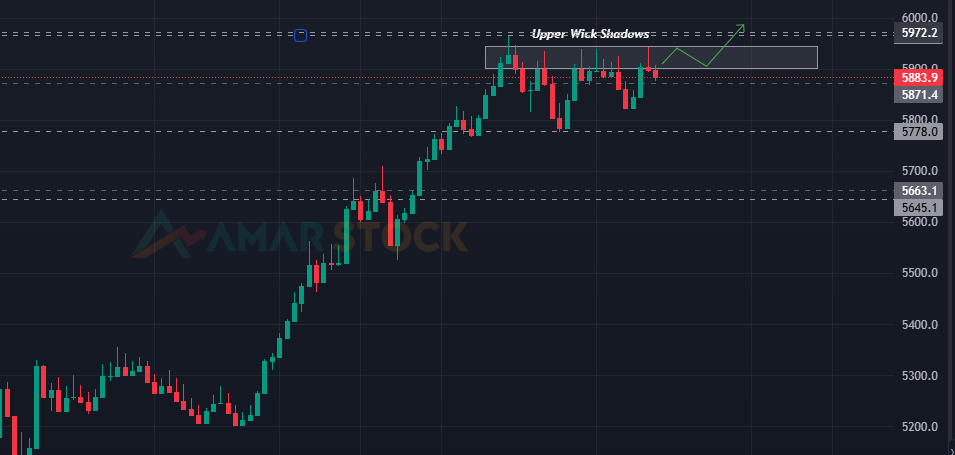
The key question on every investor’s mind is: what could be the next possible move from here?
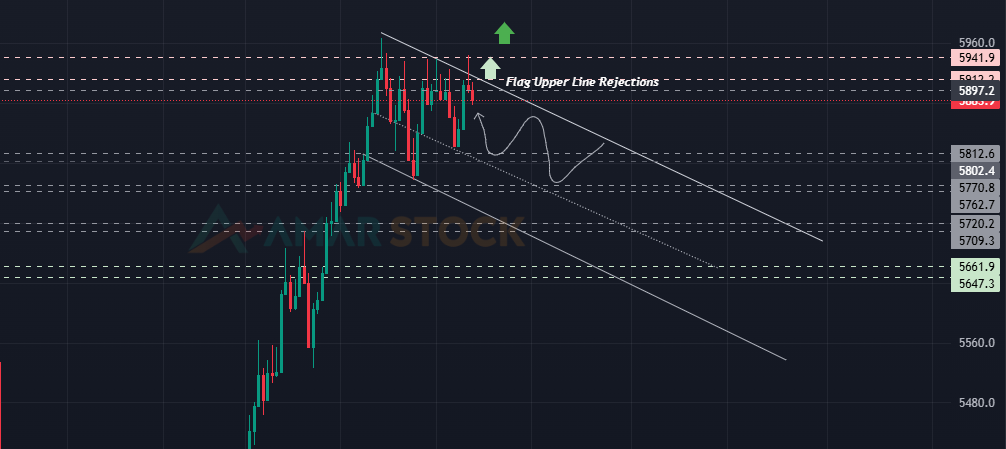
In today’s post, we’ll explore the key driving factors that could determine whether the price breaks through the recently formed flag pattern or continues to trade within its boundaries.
If the price continues to face rejection at the upper boundary of the flag, we could see a short-term correction toward the lower boundary of the pattern.
Conversely, a decisive breakout above the upper trendline could signal further upside potential.
Key Driving Factors: External factors that are going to be a concern!
- External Key Factor: Middle East Crisis
- Internal Key Factor: Power Crisis
- Regulatory Affairs: Revised Margin Rules Issue
Let's dig into the factors!
US-IRAN WAR: Middle East Crisis-Driven Crude Oil Price Uncertainty
As negotiations between Iran and Oman failed to yield a positive outcome, hopes for a successful US–Iran agreement remain uncertain. There is also no clear indication that the Strait of Hormuz will reopen in the coming days.
Against this backdrop, Brent crude futures are expected to remain elevated, with prices potentially closing the week above $88.
Meanwhile, tensions are also escalating between the Saudi-led alliance and the Houthis over the safe passage of oil tankers through the Bab el-Mandeb Strait, adding another layer of geopolitical risk to the global oil market.
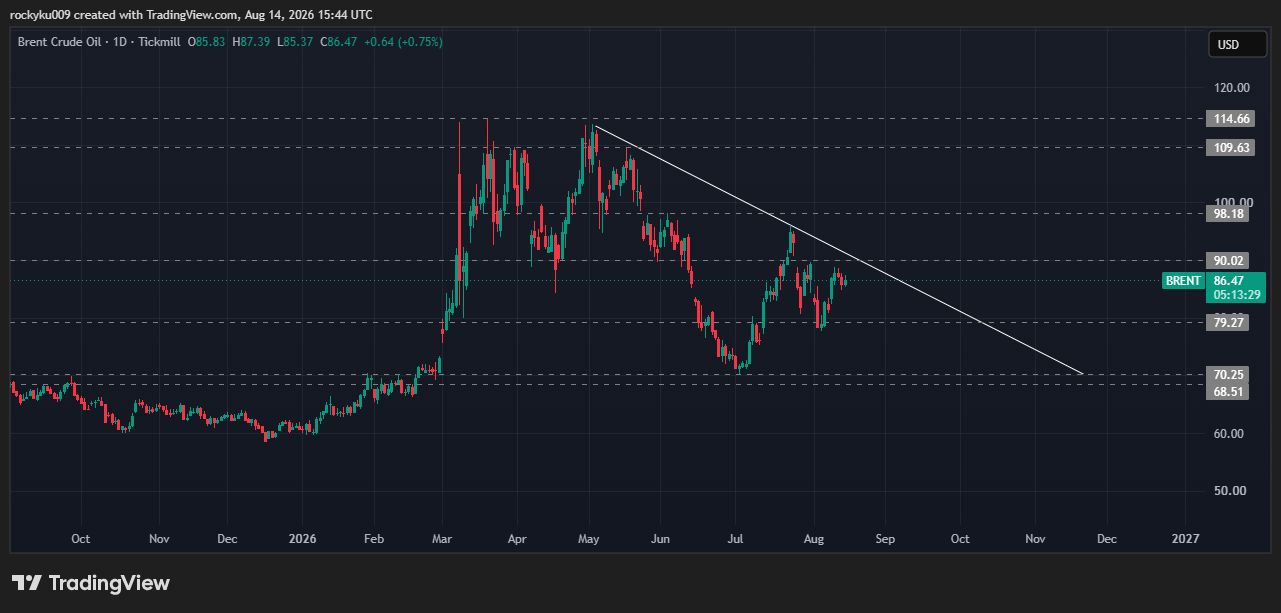
From a technical analysis (TA) perspective, a decisive breakout above the channel resistance in the $90 zone, followed by sustained trading above that level, could open the door for another move toward $100.
On the downside, the nearest significant support level appears to be around $79.
If oil prices remain elevated over the coming weeks or months, the pressure will inevitably begin to weigh on Bangladesh’s long-term macroeconomic outlook.
The situation is already showing signs of deterioration, with disruptions in gas supplies adding to the pressure from higher oil prices.
Together, these factors could further increase energy costs, strain the balance of payments, and create additional challenges for the broader economy.
Internal Key Factor: Power Crisis, Disruption of Energy Supply
The impact of electricity and gas-driven load shedding has become a growing concern, particularly following disruptions in gas supply over the past three weeks.
Load shedding in industrial areas, coupled with persistently low gas pressure, has significantly disrupted production across manufacturing hubs, ranging from small- and medium-sized enterprises to large industrial units.
Although the government is taking steps to restore adequate gas supply, continued disruptions are likely to remain a concern for macroeconomic activity in the short term, with potential implications for industrial output, business operations, and overall economic growth.
Regulatory Affairs: Revised Margin Rules Issue
The BSEC’s proposed revision to the margin rules could provide a much-needed positive catalyst for investors and improve overall market sentiment.
The proposed changes could be particularly supportive for stocks with P/E ratios in the 30–40 range, “B” category securities, and the Life Insurance and Mutual Fund sectors, subject to their inclusion in the revised list of marginable securities.
Once the official notification and clarification regarding marginable securities are issued and gazetted, the broader market could react positively, particularly if the revised framework expands the scope of marginable securities.
Such a move could enhance liquidity, encourage fresh buying interest, and improve investor confidence in the short term.
In addition, potential policy and regulatory measures targeting the Mutual Fund sector could provide further support over the longer term.
If these measures improve fund management, liquidity, investor participation, and overall market attractiveness, the Mutual Fund sector could see a more sustainable positive impact in the long run.
TA Concern of Expected Deep Zonal Correction and Backtest
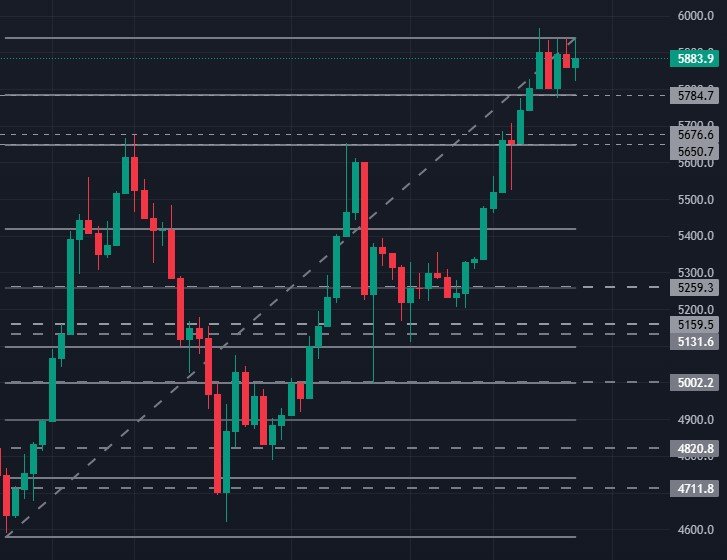
From the recent high of around 5,966.5, the DSEX Index appears to be undergoing a gradual correction. The 5,640–5,670 zone could act as a strong and technically significant support area for this correction.
If the prevailing negative factors cannot be overcome in the coming days, the index may continue its corrective move toward this zone and potentially retest the breakout area near 5,670.
A successful hold above this zone could provide a basis for stabilization and a potential recovery, while a decisive break below it would increase the risk of further downside.
Expected TA Call for 3rd Week of August' 26
The week could begin with some short-term correction on the daily timeframe, with the DSEX potentially finding initial support around the 5,780–5,800 zone.
If the revised margin rules notification or gazette is issued during the week, it could provide a positive catalyst and help the market recover from the early-session correction.
Overall, given the combination of negative external and internal factors, the market may face some near-term corrective pressure.
However, a favorable regulatory decision on the revised margin rules could improve investor sentiment and trigger a partial recovery, partially reversing the correction seen earlier in the week.
“Therefore, breaking above the previous high will remain a challenge for the market this week.”








Rocky
August 3rd Week Update