

Oil Prices and Remittances: Bangladesh’s Two Middle East Risks
A factory owner in Bangladesh worries about the cost of the next fuel shipment. In another household, a family waits for money from a relative working in Saudi Arabia. The Middle East conflict connects both stories: it can raise the dollars Bangladesh needs to spend while threatening some of the dollars it receives.
Renewed Hormuz diplomacy offers a possible opening. But for Bangladesh, the question now reaches beyond oil prices to migrant employment, remittances and household purchasing power.
Hormuz Offers Hope, but Conditions Still Matter
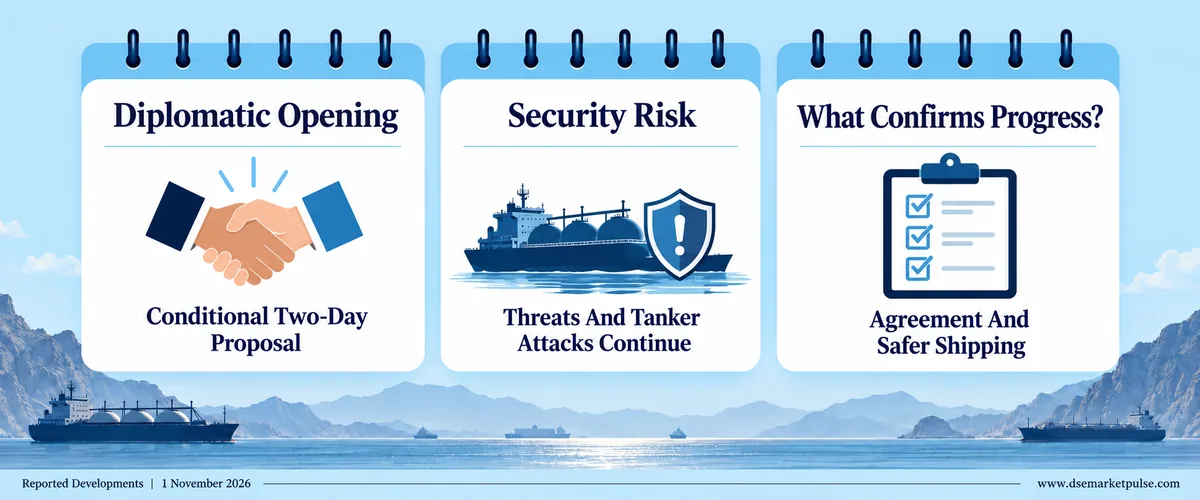
Al Jazeera reports that Iran and Qatari mediators have discussed reopening Hormuz within two days, on the condition that Washington meets Tehran’s demands. The Economic Times also describes the proposal and the conditions surrounding it. This remains a diplomatic proposal—not confirmation of reopening or an unconditional two-day countdown.
At the same time, RFE/RL reports renewed US military threats alongside continued openness to diplomacy. With Israel’s election behind it and the US midterms approaching on 3 November, political uncertainty persists; the calendar alone does not establish whether or when another attack will occur.
Read More: The Latest Hormuz Negotiations
Oil-Price Risk: A Larger Import Bill
Reuters reported that expiring December Brent settled at $117.64 on 30 October, while the more active January contract closed at $113.43. It also reported a tanker attack in Hormuz. These prices refer to different delivery months and should not be read as a sudden same-contract price fall.
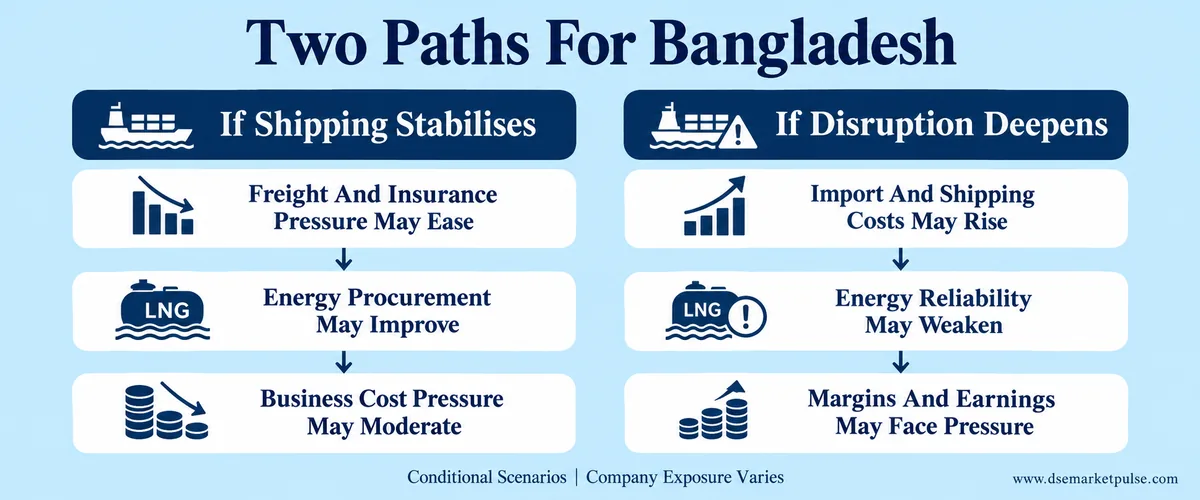
For Bangladesh, prolonged disruption could affect freight, insurance and delivery reliability as well as fuel prices. TBS’s account of Fitch’s assessment estimates that a $10-per-barrel increase could add $1.2 billion to the annual oil import bill. This is a sensitivity estimate, not a forecast that the increase will occur.
A negotiated opening could ease that pressure. However, cheaper crude would not immediately guarantee lower domestic prices or uninterrupted gas and electricity: contracts, procurement, policy and supply conditions also matter.
Read More: Fitch’s Assessment Of Bangladesh’s Energy And Remittance Risks
Remittance Risk: Pressure on Jobs and Savings
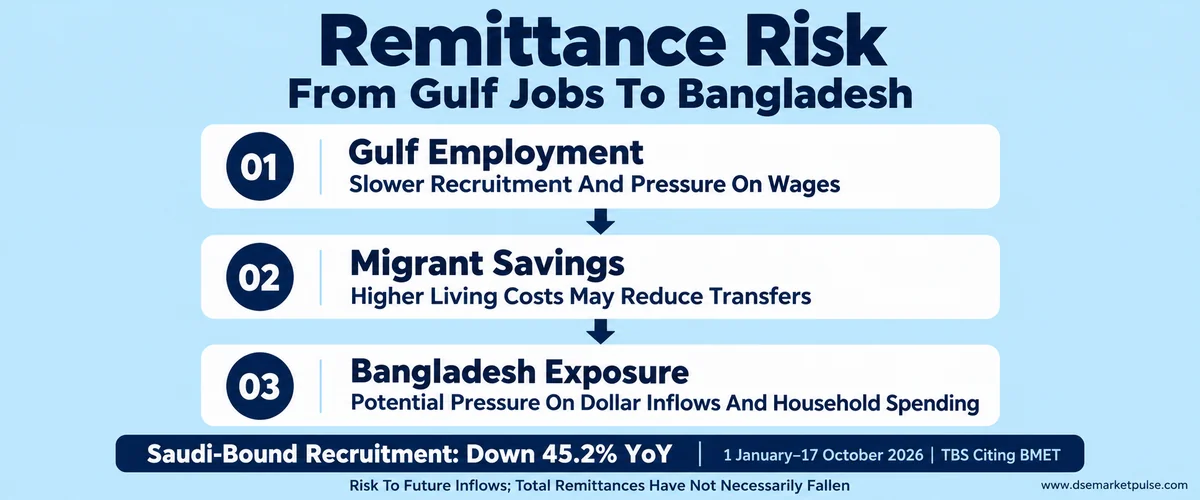
The second risk develops through workers’ livelihoods. TBS, citing BMET, reports that Saudi-bound recruitment fell 45.2% year-on-year between 1 January and 17 October. Yet total remittances rose 13.3% to $8.59 billion in July–September. Fewer new jobs signal vulnerability in future earnings; they do not prove that overall remittances have already declined.
Bonik Barta highlights how weaker business activity and higher living costs in Saudi Arabia could squeeze migrants’ employment and savings. Fitch’s warning, as reported by TBS, is that prolonged conflict and returning workers could reduce remittances and weaken external liquidity.
Read More: Saudi Jobs Slump And Remittance Risks
Where the Two Risks Meet
Costlier energy can increase dollar demand, while weaker remittances can reduce dollar supply. If both persist, foreign-exchange availability and the taka could face additional pressure. At household level, smaller transfers could restrain purchases; at company level, higher costs and weaker demand could meet in the same earnings report.
Manufacturers, transport operators and consumer businesses could therefore face different combinations of margin and sales pressure. Banks could experience changes in foreign-exchange flows and borrowers’ repayment capacity. Energy companies’ results would still depend on contracts, regulated margins and payment collection. These are conditional economic channels, not predictions for individual shares.
Investor Focus
Actual shipping movements, sustained energy costs, monthly remittances, overseas recruitment and company disclosures will offer stronger evidence than political headlines alone. Hormuz progress could help energy logistics, but a recovery in migrant jobs would also require wider regional stability.
For Bangladesh, the story is now about both sides of the foreign-currency balance: what the country pays for energy and what its workers can continue sending home.
Read More
- Al Jazeera — 1 November Hormuz negotiations
- The Economic Times — Proposal and Iranian conditions
- RFE/RL — Military threats and diplomatic signals
- Reuters — 30 October oil settlement and shipping risks
- Previous DSE Market Pulse analysis
- TBS, 25 October — Saudi jobs slump and remittance risks
- Bonik Barta, 13 October — Bangladesh’s exposure to Saudi-Houthi conflict
- New Age, 30 October — Fitch remittance warning (full article not retrievable during review; headline and summary indexed)
- TBS, 30 October — Fitch assessment of energy and remittance exposure


Leave a comment
Please login to leave a comment or reply.